# Install Tidio on Nuxt
Section: Install Tidio
Description: Add the Tidio widget to Nuxt, identify logged-in visitors, and control widget visibility during client-side navigation.
Verified against Tidio panel 12.331.0
Last updated: 2026-11-18
Source: https://help.tidio.com/articles/install-nuxt/
Add Tidio to your Nuxt app with one ` useHead ` script entry in the root component. You do not need a package for Tidio. Checked with Nuxt 4.6.4 and Vue 3.5.45, with a production server-rendered build.
**In this article, you'll learn:**
- [How to find your Public key](https://help.tidio.com/articles/install-nuxt/#public-key)
- [How to add the widget to Nuxt](https://help.tidio.com/articles/install-nuxt/#install)
- [How to check the installation](https://help.tidio.com/articles/install-nuxt/#check)
- [How to identify logged-in visitors](https://help.tidio.com/articles/install-nuxt/#identify-visitors)
- [How to hide the widget on some pages](https://help.tidio.com/articles/install-nuxt/#hide-on-pages)
- [How to troubleshoot the installation](https://help.tidio.com/articles/install-nuxt/#troubleshooting)
## Find your Public key
Log in to your Tidio panel and go to **Settings > Developer > Project data**. Click the **Public key** field to select its value, then copy it.
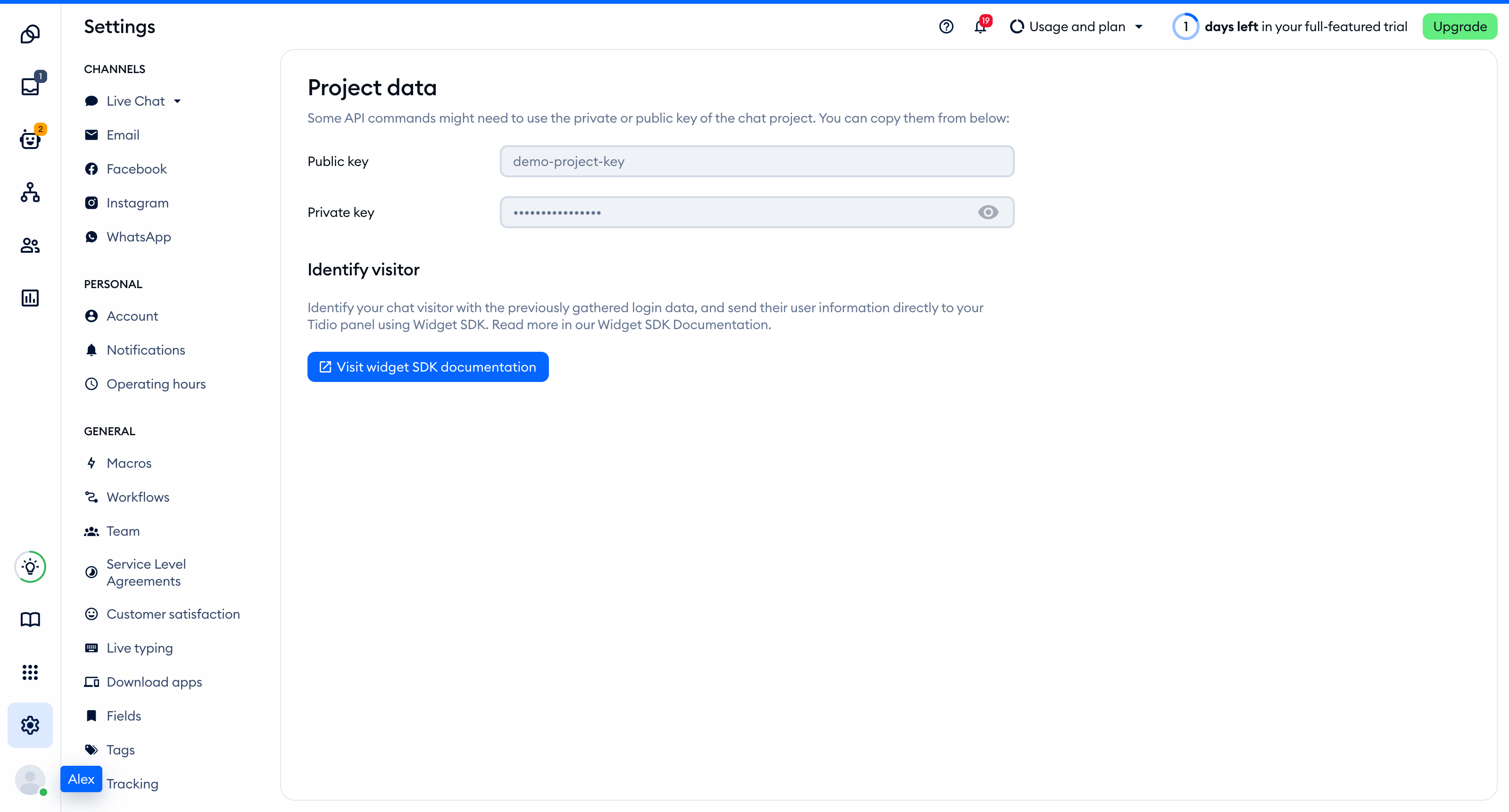
The Public key is part of the script address that every visitor's browser loads, so you can keep it in front-end code. The private key on the same page is different: never put it in your website.
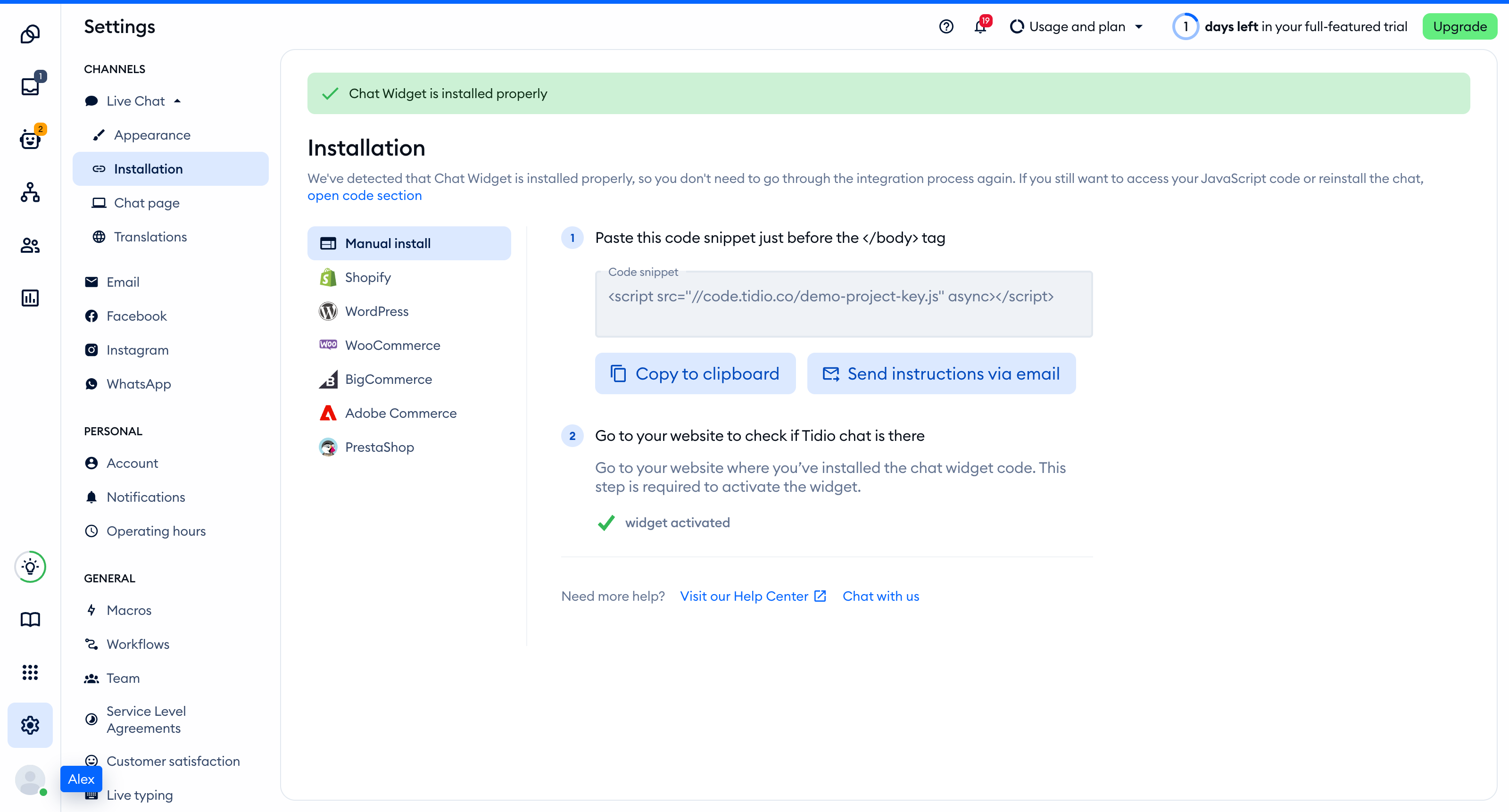
You'll find the same key inside the installation code in **Settings > Live Chat > Installation**, under **Manual install**:
```
```
## Add the widget to Nuxt
Add this public runtime configuration to ` nuxt.config.ts `, next to your existing options:
```
export default defineNuxtConfig({
runtimeConfig: { public: { tidioKey: '' } },
})
```
Set the matching environment variable in ` .env `. Nuxt reads it in development and when you build or generate the site:
```
NUXT_PUBLIC_TIDIO_KEY=YOUR_PUBLIC_KEY
```
On a deployed server, set ` NUXT_PUBLIC_TIDIO_KEY ` in the server environment too, because the built server does not read ` .env `. For static output, set it when you generate the site.
Call ` useHead ` in ` app/app.vue `, not in a page component. The ` tagPosition: 'bodyClose' ` option puts the script at the end of the body. This root component has example navigation. Keep your own layout.
```
```
If an AI coding assistant edits this project for you, give it the prompt from [Install Tidio with an AI coding agent](https://help.tidio.com/articles/install-ai-coding-agents/).
## Check the installation
Open your site in a regular browser window. The chat widget appears in the corner of the page and stays there when you move between pages. Headless and automated browsers may not show the widget, so do not rely on them for this check.
Loading a page with the widget is what activates it. After that, **Settings > Live Chat > Installation** in your Tidio panel says **Chat Widget is installed properly**.
[Video](https://help.tidio.com/article-media/install-nuxt/walkthrough.mp4)
Silent walkthrough. A demo Nuxt site with the Tidio chat widget in the corner. The widget stays when the visitor returns to the home page and is hidden on the Checkout page.
## Identify logged-in visitors
To identify the visitor before Tidio loads, remove the ` useHead ` script entry above and create ` app/plugins/tidio.client.ts `. Nuxt runs ` .client.ts ` plugins only in the browser. This plugin is then the only place that loads the script.
Replace the example identity with your authenticated user's data. If your app loads the session asynchronously, wait for it in the plugin before you set the identity and append the script. For a signed-out visitor, leave out the ` document.tidioIdentify ` line.
```
type Visitor = { distinct_id?: string; email?: string; name?: string; phone?: string }
declare global {
interface Document { tidioIdentify?: Visitor }
interface Window {
tidioChatApi?: {
on(event: 'ready', callback: () => void): void
display(visible: boolean): void
setVisitorData(visitor: Omit): void
resetVisitor(): void
}
}
}
export default defineNuxtPlugin(() => {
document.tidioIdentify = { distinct_id: 'unique_id', email: 'contact@mail', name: 'John Doe' }
const ready = ref(false)
const onReady = () => { ready.value = true }
if (window.tidioChatApi) window.tidioChatApi.on('ready', onReady)
else document.addEventListener('tidioChat-ready', onReady, { once: true })
const updateVisitor = (visitor: Omit) => {
if (ready.value) window.tidioChatApi?.setVisitorData(visitor)
}
const logOut = () => {
delete document.tidioIdentify
if (ready.value) window.tidioChatApi?.resetVisitor()
}
const route = useRoute()
watch([() => route.path, ready], () => {
if (ready.value) window.tidioChatApi?.display(route.path !== '/checkout')
}, { immediate: true })
const config = useRuntimeConfig()
const script = document.createElement('script')
script.src = `https://code.tidio.co/${config.public.tidioKey}.js`
script.async = true
document.body.appendChild(script)
return { provide: { tidio: { ready, updateVisitor, logOut } } }
})
```
In the component that handles login and logout, get ` $tidio ` from ` useNuxtApp `, as this ` app/app.vue ` does. Call ` updateVisitor ` after a login once ` ready ` is true. It updates visitor data but does not merge conversations. Only the ` document.tidioIdentify ` set before the script loads does that. On logout, ` logOut ` removes the identity and then calls ` resetVisitor `, which restarts the widget. The plugin runs only in the browser, so ` $tidio ` is undefined during server rendering and the buttons render disabled.
```
```
## Hide the widget on some pages
The client plugin above already has the route watcher. Replace ` /checkout ` with the route where you want the widget hidden. The watcher waits for the widget's ready event and runs again after every client-side navigation. If you only need this rule, leave out the ` document.tidioIdentify ` line.
```
const route = useRoute()
watch([() => route.path, ready], () => {
if (ready.value) window.tidioChatApi?.display(route.path !== '/checkout')
}, { immediate: true })
```
It calls ` display(false) ` on ` /checkout ` and ` display(true) ` on every other route. Hiding the widget does not stop Flows from triggering. To load the widget only on a list of addresses instead, see [Show the widget only on specific pages](https://help.tidio.com/articles/show-widget-only-on-specific-pages/).
## Troubleshooting
- If the script fails to load, check that ` NUXT_PUBLIC_TIDIO_KEY ` holds your Public key and not the placeholder ` YOUR_PUBLIC_KEY `.
- If you see two widgets or duplicate script requests, remove one installation. Use either the ` useHead ` entry or the client plugin, not both.
- If server rendering reports that ` window ` or ` document ` is not defined, move that code into the ` .client.ts ` plugin.
- If your site uses a Content Security Policy, allow ` code.tidio.co ` in ` script-src ` and add the other hosts from the [Content Security Policy](https://developers.tidio.com/docs/widget-security-policy) page of the developer documentation.
- If an automated browser loads the script but shows no widget, check again in a regular browser window.
## Further reading
- [Install Tidio on your website](https://help.tidio.com/articles/install-website/)
- [Widget SDK](https://help.tidio.com/articles/widget-sdk/)
- [Install Tidio on Vue](https://help.tidio.com/articles/install-vue/)
- [Install Tidio with an AI coding agent](https://help.tidio.com/articles/install-ai-coding-agents/)